Lock replacement
Time for adifferent lock?
Replace worn or damaged hardware with a lock that suits your door and how you use it.
Ask about a new lock What happens next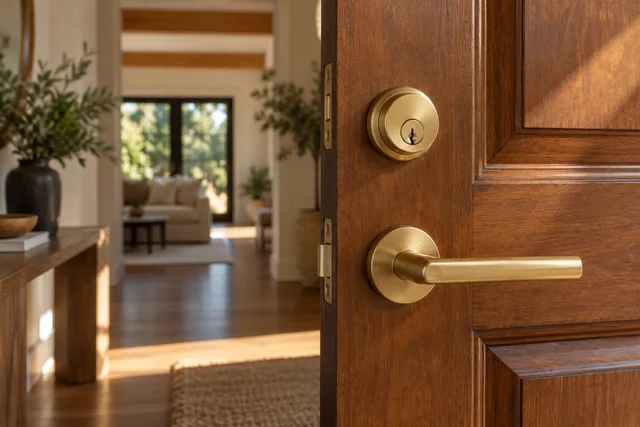 Add your suburb
You can also check service areas before asking about a visit. Coverage and availability still need confirming.
01 — Your situation
What needs to change?
Replace like for like
A compatible replacement may suit a worn lock when you want to keep the same style of operation. Existing holes and fittings still need checking.
Change the hardware
A different handle or lock may suit a change in how the entrance is used. Check the door thickness, available space and any work needed to fit it.
Rekey instead
If the lock is suitable and in good condition, changing the key that operates it may address lost-key concerns without replacing all the hardware.
A suitable lock starts with the door.
A loose handle, unreliable latch or damaged lock can make an entrance difficult to use. Replacement involves checking the existing fittings, choosing compatible hardware and testing how the door closes and locks. The door and frame matter as much as the lock itself.
A complete replacement is not always needed. If the hardware works properly and the concern is a missing key, rekeying may be an option. If a new lock is needed, compare the fit, operation and finish before choosing it.
A complete replacement is not always needed: compare rekeying and replacement before choosing the scope. If operation is unreliable, read why a key may stop turning so you can describe the symptom clearly.
02 — Our approach
A clear plan.Before we start.
Identify the fittings
Describe the lock and door, including any visible damage. A photo of the hardware can help identify what needs checking.
Compare suitable options
Check the proposed hardware, finish, key arrangement and fitting work. Ask whether rekeying or a repair could address the problem.
Fit and check operation
Replacement work includes checking the latch, strike and key operation with the door open and closed. Any door or frame issue should be identified separately.
Measurements or inspection may change the proposed work. Approve the hardware, fitting scope and final price before work begins.
03 — The right approach
Choose hardware that works with your door.
The hardware is one part of the total. A quote should also explain the fitting work and whether alterations to the existing door or frame are included.
See pricing detailsWhat goes into a replacement quote?
| Factor | Why it matters |
|---|---|
| Hardware choice | Lock type, finish and keying requirements affect which parts are suitable and what they cost. |
| Existing preparation | Door thickness, cut-outs and the strike position determine whether the replacement fits or needs additional work. |
| Visit and fitting | Confirm the call-out, labour, number of locks and any additional charges for the requested booking time. |
04 — Questions
A few things you might ask.
It depends on which part is worn or damaged. A cylinder, handle or other component may be replaceable on its own. If only the key needs changing and the lock is suitable, ask about rekeying before replacing the complete assembly.
That may be possible with compatible cylinders and keyways. Have the existing locks checked before selecting the new hardware; similar-looking locks do not necessarily accept the same key arrangement.
Confirm this before buying. The model needs to suit the door dimensions and existing fittings. Ask who will check compatibility, what the fitting quote includes and how any product or installation issue would be handled.
A matching replacement may use the existing preparation, while a different model may need alterations. Door alignment or frame damage can also affect operation. Ask for any additional work to be identified and priced before agreeing to it.
Let’s sort out your lock.
Start with the door type and what you want to change.
Images are illustrative.