In this guide
Check whether anyone needs urgent help
If someone is in immediate danger, call Triple Zero (000). Make that the priority rather than working through a booking checklist. Otherwise, move somewhere safe while you check your access options, particularly if it is late, raining or you have children with you.
Avoid climbing to an upper window, forcing a door or experimenting with the lock. A damaged frame or broken key can leave you with another problem to resolve after access is restored.
Check the access you are authorised to use
Contact someone who may hold a spare: a household member, trusted contact, property manager or building manager. Ask how soon they can realistically help. If another normal entrance is available and you are authorised to use it, check it without forcing anything.
In an apartment building, distinguish the shared entrance from your own front door. A building access fob may get you into the foyer but cannot necessarily open the apartment. Explain which door is preventing access.
Describe what happened before the door closed
“I’m locked out” is a useful starting point, but a little detail helps the person responding understand the job. Note which description fits:
- Key inside: the door shut behind you and the key is in the home.
- Key missing: you cannot find it, or believe it has been taken.
- Key present but not working: it will not enter, turn or release normally.
- Door problem: the handle, latch or door position seems different from usual.
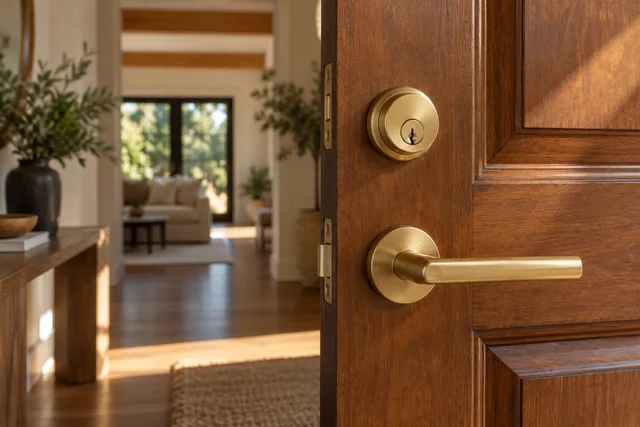
You do not need to identify the lock model. If it is safe to do so, a clear photo of the outside hardware can be more helpful than guessing its name. Do not send a close-up of the cut pattern on a key.
Ask about the visit and the total
When arranging help with a home lockout, give your suburb, the type of property and the affected entrance. Ask what evidence of identity and authority to enter will be needed, especially if your identification is also inside.
Before approving work, clarify the call-out charge, labour, any additional booking-time charges and how replacement parts would be quoted if required. Ask what happens if the on-site assessment changes the proposed work. Our guide to locksmith pricing explains the components to discuss.
Review access once you are back inside
Check that the door closes, latches and operates as agreed before the visit ends. If a key is missing, ask whether changing the keying of a compatible lock or replacing hardware is appropriate. The rekeying and replacement comparison explains that distinction.
Common questions
No single outcome applies to every lockout. The cause, condition and type of hardware need assessing before the work can be confirmed.
Confirm availability for your suburb, the estimated arrival time, any call-out charge and what identification or authority to enter will be required. Ask how additional work and costs will be approved after the lock is assessed.
Contact your property manager or landlord about their access process and approval for work. Explain the immediate access problem separately from any proposed change to the locks.
Need to explain a lockout? Start with your suburb and what happened to the key.