In this guide
Start with what needs to change.
Start with the condition of your lock and the reason for changing it. A different key may be all you need, or the hardware itself may need attention.
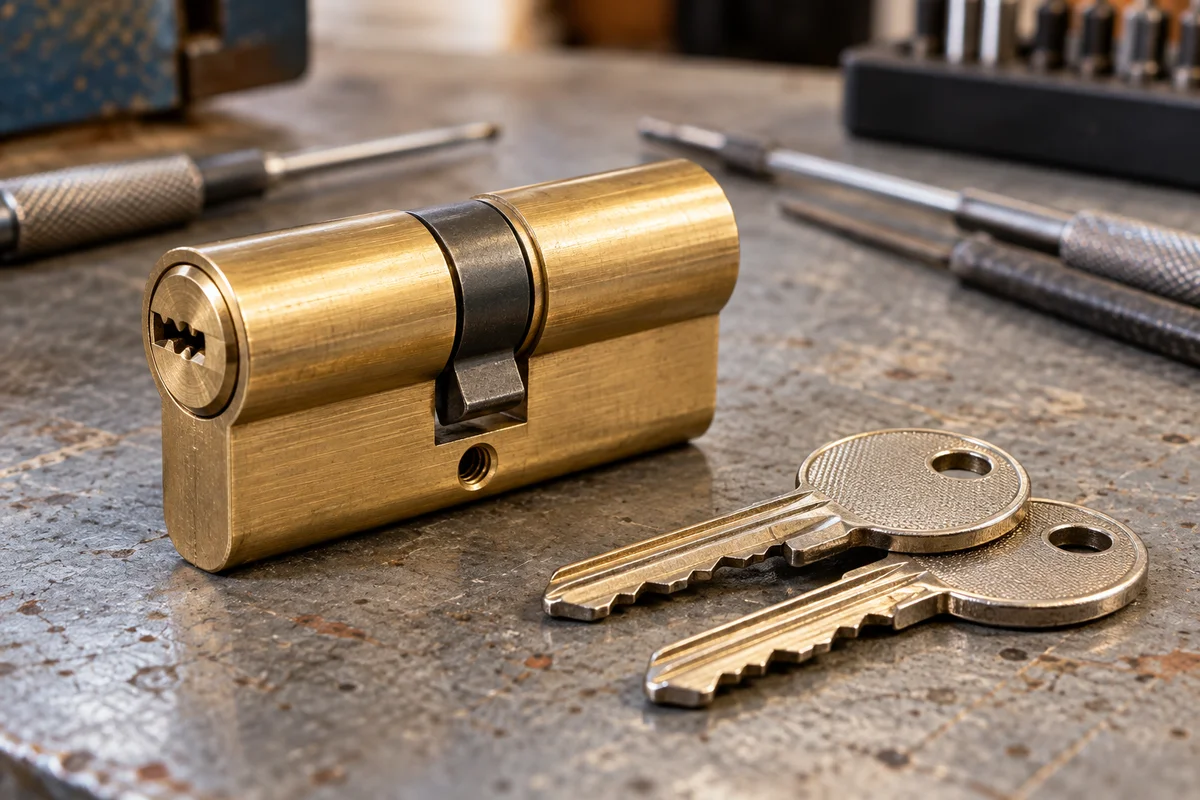
Rekeying changes which key operates a compatible existing lock. Its internal keying is changed so the previous key no longer operates that rekeyed cylinder. Suitable external hardware can stay in place: rekeying does not mean replacing the whole handle, latch and lock assembly.
Replacement means changing the agreed hardware. That might be a cylinder or a more complete lockset; ask which parts are included. It may suit a worn, damaged or unsuitable lock, or a change in how the door needs to work.
The options are not interchangeable. A suitable lock in good working condition can often be rekeyed. Changing its key does not, by itself, repair a loose handle, a faulty latch or a door that does not close properly.
Two options. Different jobs.
Scroll across the table to compare both options. →
| Feature | Rekeying | Replacement |
|---|---|---|
| What changes | The keying of a suitable cylinder, so a different key operates it. | The cylinder, lockset or other hardware specified in the quote. |
| What stays | Compatible hardware in usable condition can remain. | Parts outside the agreed replacement may remain. Confirm the scope. |
| When to consider it | Changing who has a working key, including after a move or a lost key. | Worn, damaged, unsuitable or non-rekeyable hardware, or a different operating requirement. |
| Compatibility limits | The cylinder and keying system must support the work. One-key arrangements need compatible locks and keys. | New hardware must suit the door, existing preparation and frame. A like-for-like fit needs checking. |
| What affects cost | Lock type, number of cylinders, key availability and the keying arrangement. | Hardware choice, parts being replaced and the fitting or preparation required. |
Rekeying
Feature
- What changes
- The keying of a suitable cylinder, so a different key operates it.
- What stays
- Compatible hardware in usable condition can remain.
- When to consider it
- Changing who has a working key, including after a move or a lost key.
- Compatibility limits
- The cylinder and keying system must support the work. One-key arrangements need compatible locks and keys.
- What affects cost
- Lock type, number of cylinders, key availability and the keying arrangement.
Replacement
Feature
- What changes
- The cylinder, lockset or other hardware specified in the quote.
- What stays
- Parts outside the agreed replacement may remain. Confirm the scope.
- When to consider it
- Worn, damaged, unsuitable or non-rekeyable hardware, or a different operating requirement.
- Compatibility limits
- New hardware must suit the door, existing preparation and frame. A like-for-like fit needs checking.
- What affects cost
- Hardware choice, parts being replaced and the fitting or preparation required.
An assessment helps confirm which options are suitable. Neither option has one fixed price for every door.
Which situation sounds familiar?
Moving into a home
You may not know who still holds a copy of an existing key. Rekeying can be an option when the locks are compatible and in good condition. Check all relevant entry doors rather than assuming one change covers the property. See our locks and keys checklist for moving home to record each entrance.
If you do not have authority to change the locks, confirm approval with the person responsible for the property before arranging work.
A missing key
Opening a door alone does not invalidate a lost key. If the lock’s keying is unchanged, a key that previously operated it can still do so. Ask separately about regaining entry and preventing the missing key from working.
Rekeying or replacing the affected cylinder may address that concern. Other doors using the same key need separate attention, and not having a working key can change the options or work involved.
A worn or damaged lock
Replacement may make sense when hardware is damaged, worn, cannot be rekeyed or no longer suits the entrance. Have the door, frame and fittings assessed alongside the lock; a key change will not fix every operating problem.
A different lock is not automatically more secure. Hardware selection, the door and frame, and how the lock is fitted all matter.
What affects the cost?
Lock type and condition
Different cylinder designs and key systems need different work. A damaged or unsuitable component may change what can be retained.
Number of cylinders
Count the locks involved and explain whether they currently share a key. Ask how many new keys and which doors the quote covers.
Hardware and fitting
For replacement, clarify the parts, finish and any preparation or adjustment included. For rekeying, confirm whether existing components can stay.
Call-out and booking time
Ask about travel, assessment, labour and any additional charge for the requested time. Confirm availability and the total before approving the work.
Compare the agreed scope and total, rather than assuming rekeying or replacement will always cost less.
Before you decide.
-
Describe the change you need
Is the concern a missing key, unreliable hardware or a different way of using the door? Mention whether you have a working key.
-
Check condition and compatibility
Ask whether the existing lock can be rekeyed and whether the door and frame need attention. Brand or appearance alone does not establish compatibility.
-
Clarify the parts and key arrangement
Confirm what stays, what changes and whether one key can operate the relevant doors. Keyed-alike and master-key arrangements are different requirements.
-
Approve the scope and total
Ask about the work involved and the total price for each suitable option. If the assessment changes the scope, approve the revised work and price before it starts.
Still have a question?
Some common questions about changing keys and replacing lock hardware.
A correctly rekeyed cylinder should work with the intended new key and no longer with the old one. That change applies to the cylinders actually rekeyed. Other locks using the same old key may need separate work.
No. It depends on the lock design, condition and available keying options. A worn, unsuitable or non-serviceable component may need replacing. Have the actual lock assessed rather than relying on its appearance.
No. Replacing a lock can address a particular hardware problem, but it is not a security guarantee. The chosen hardware, door and frame, installation and other ways of entering the property also matter.
Sometimes, where the locks and key system are compatible. Read about one key for several locks, then explain which doors should share access and ask what can be retained. This is not the same as a master-key system, which can give different keys different access.
Explain that before booking. Some key-changing procedures depend on a working key; other work may require a different assessment or replacement component. If you are locked out, confirm both entry work and what will happen to the missing key’s access.
Related services

Not sure which option fits?
Describe your lock and what you want to change.