Rekeying your locks
A new key.The same lock.
Rekey a suitable lock so a different key operates it, while keeping the existing hardware.
Ask about rekeying What happens next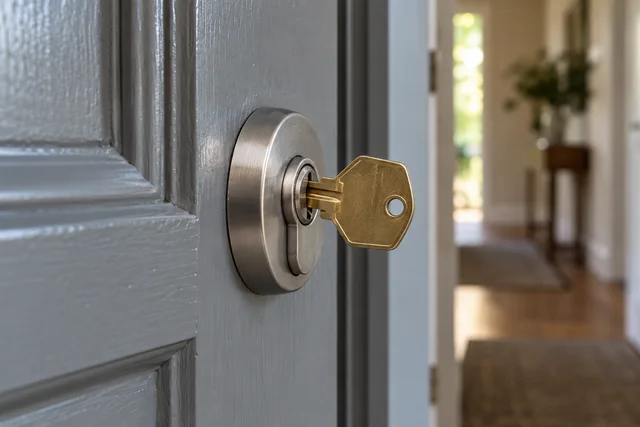 Add your suburb
You can also check service areas before asking about a visit. Coverage and availability still need confirming.
01 — Your situation
When is rekeying an option?
Moving into a property
You may not know how many copies of the existing keys are in circulation. List the entrances you want included so none are overlooked.
A key is missing
Identify every lock that key operates. Rekeying one cylinder does not change access through another lock that still accepts the old key.
Fewer keys to carry
Compatible locks may be keyed alike to use one key. A mix of brands or keyways can limit what is possible without changing some cylinders.
A different key. The same suitable lock.
Rekeying changes the keying inside a compatible lock rather than replacing the complete lock. Once it has been correctly rekeyed, the previous key no longer operates that cylinder. Handles and other suitable hardware can remain in place.
This can be useful when you move in, lose a key or no longer want an old key to provide access. Rekeying does not repair worn mechanisms or a door that will not close properly. Each lock needs to be checked for compatibility and condition before the work is agreed.
If you are moving in, use our moving-home locks and keys checklist to list the entrances. For a proposed shared-key arrangement, read about using one key for several locks.
02 — Our approach
A clear plan.Before we start.
List the locks
Count the relevant cylinders, not just the doors. Note which keys currently operate each one and which keys should stop working.
Check compatibility
The lock type and condition determine whether it can be rekeyed and whether several locks can share a key.
Rekey and test
The agreed cylinders are rekeyed and checked with the new keys. Confirm that the old keys no longer operate those cylinders and test normal door operation.
Agree on the cylinders to include, the number of new keys and the total price before the rekeying work starts.
03 — The right approach
Start with the cylinder and its condition.
The number and type of cylinders matter more than the number of entrances alone. Include all the locks you want changed when asking for an estimate.
See pricing detailsWhat affects a rekeying price?
| Factor | Why it matters |
|---|---|
| Cylinders involved | A door may have more than one cylinder. The total depends on which cylinders are included and their keying systems. |
| Condition and compatibility | Worn or incompatible hardware may need another approach. Any replacement parts should be quoted separately. |
| Keys and visit | Check how many new keys are included, whether extra copies cost more and what call-out or booking-time charges apply. |
04 — Questions
A few things you might ask.
Rekeying changes which key operates a compatible cylinder. Replacement changes some or all of the lock hardware. The condition of the lock and your access needs determine which approach is suitable; a new lock is not automatically the necessary choice.
Only if the locks are compatible with the proposed key arrangement. Different keyways or unsuitable cylinders may prevent this. Ask which locks can stay and whether any cylinder changes would be needed before choosing a keyed-alike setup.
Mention whether a working key is available when requesting the job. The lock design and current access affect the work needed. Do not assume the same process or price applies when no key is available.
Not by itself. A worn cylinder, misaligned strike or door problem needs assessment in its own right. Describe any stiffness, loose parts or difficulty closing the door so that the underlying issue can be included in the scope.
Let’s sort out your lock.
Include the number of cylinders and whether you have a working key.
Images are illustrative.